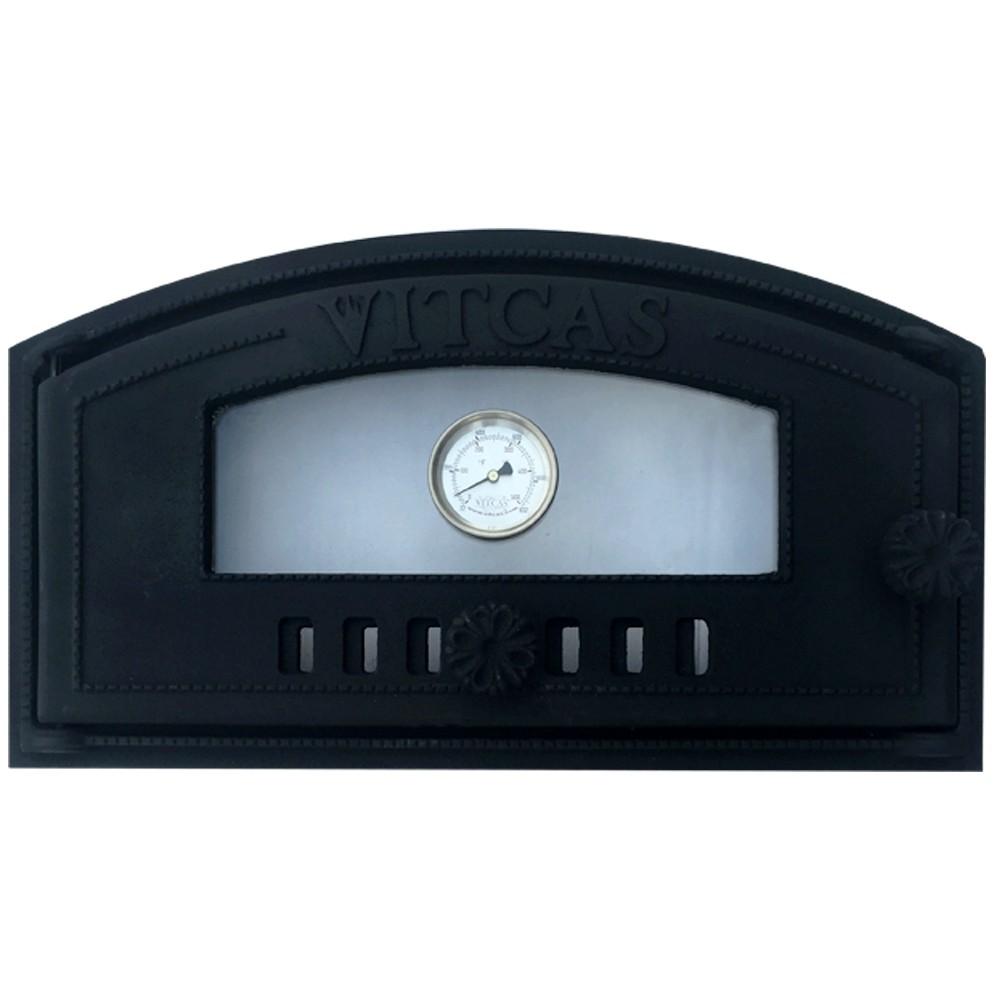
A photo of the worn element is helpful, but it is rarely enough to choose a replacement. The device model, the part's function, and its actual dimensions are needed. Collect this data before ordering, especially when the new product is to be installed in an existing opening or lining.
Start with the device and location
Record the name of the oven and its construction documentation. Add a general view and a detail with a visible scale. Mark the position of the element, the way it rests, and the joining material, which may be difficult to identify after disassembly.
For Vitcas oven doors, the card provides separate dimensions for the frame and the opening. Compare the correct values with the mounting location, not just the external size. Also check the clearance and access for adjustment and mounting.
The material should retain its function
Vitcas arch firebrick has a specific wedge profile. Record the orientation and dimensions of both sides before selecting a similar element. Rotating the wedge or changing its thickness can alter the geometry of the entire part.
Dense refractory bricks have a different role than lightweight insulation. Do not order a replacement based solely on colour or similar maximum temperature. Selection must take into account contact, load, and connection requirements in the specific structure.
Confirm the fit before work
Compare the device requirements with the product data sheet and installation plan. Check whether the replacement does not change the tool path, equipment support, or required access. Do not assume that every part from one brand fits all previous ovens.
Keep the data of the old component and the approved selection. The list of dimensions and photos allows determining whether the available product corresponds to the part being replaced in the device. After proper fitting, plan the required bonding, drying, and preparation of materials before the device is used again.